^^barbell-strategy, barbell effect
prompt: barbell effect (meaning)
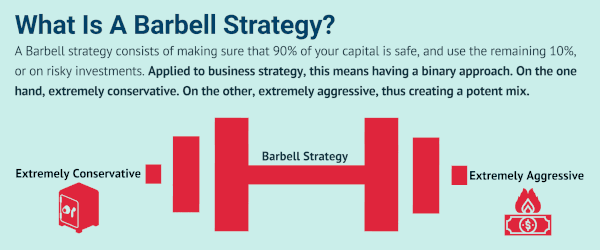
The barbell effect (or barbell strategy) is a dual approach to handling
uncertainty, risk, or market changes by focusing entirely on two opposite
extremes while avoiding the middle ground. It acts like a weightlifter's
barbell, with heavy weights on both ends and a thin, hollowed-out bar in the
middle.
Depending on the context, the concept takes on three primary meanings:
1.
In Risk Management and Investing
Popularized by statistician and trader Nassim
Nicholas Taleb in his book Antifragile, this strategy involves taking extreme
measures to protect yourself from downside risk while exposing yourself to
maximum upside potential.
- The safe end: Allocating the vast majority of assets
(e.g., 85-90%) into hyper-safe, risk-averse investments (like cash, Treasury
bonds, or blue-chip stocks) to prevent total ruin.
- The speculative end:
Allocating a small portion of assets (e.g., 10-15%) into highly speculative,
high-risk, or high-reward ventures (like startups or emerging markets).
- The
middle: You completely avoid "moderate risk" investments, which often create a
false sense of security and are highly prone to unexpected market drops.
2. In
Fixed-Income Finance
In bond investing, the barbell strategy refers to a
portfolio structure that focuses on short- and long-term maturities while
bypassing intermediate bonds.
- Short-term bonds provide liquidity and protect
against interest rate hikes, allowing the investor to reinvest quickly.
- Long-term
bonds lock in higher yields for a prolonged period and allow for capital gains
if interest rates drop.
3. In Business and Market Dynamics
The term is frequently
used to describe how a market or industry polarizes, hollowing out the
middle-tier competitors and leaving only the extremes to thrive.
- Luxury vs.
Discount: Consumers splurge on high-end, exclusive premium goods (like Gucci or
Louis Vuitton) or hunt for bargains at discount chains (like Zara or H&M), while
mid-market stores often get squeezed out.
- Digital vs. Analog: Brands heavily
double down on AI, automation, and digital scale on one end, while investing
intensely in real-world, highly tactile experiences (like live events and
community pop-ups) on the other end, abandoning the "middle" of traditional
advertising.
If you're exploring this for your own financial portfolio or
business, could you let me know which area you are most interested in so I can
provide more specific strategies or examples?